
Industrial Electrician
Contact Huey Electrical Today
Experienced Industrial Electricians in Bloomfield, NJ
Industrial facilities depend on reliable electrical systems to keep equipment running and employees working safely. Huey Electric provides industrial electrical installation, troubleshooting, repairs, and maintenance in Bloomfield, NJ, and throughout Northern New Jersey. With over 15 years of experience, we work with three-phase power, 480-volt systems, and industrial equipment connections. From older manufacturing buildings to modern warehouses, we help facility managers address electrical problems, accommodate new equipment, and maintain dependable power.
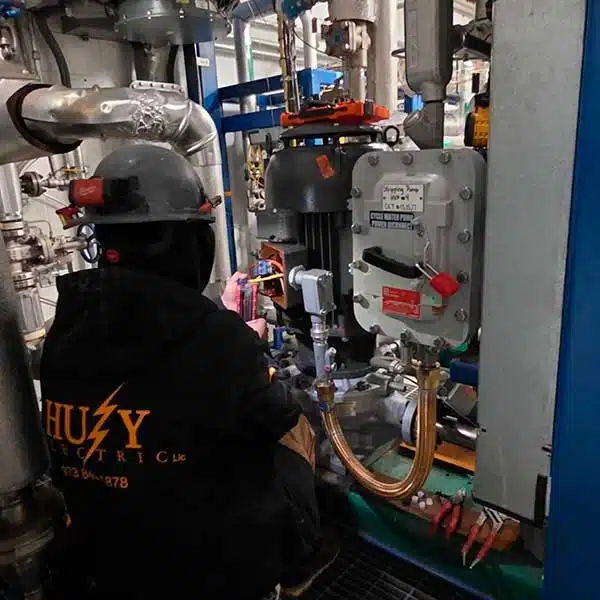
What Types of Work Do Industrial Electricians Handle?
Industrial electricians install, troubleshoot, repair, and maintain the electrical systems that power machinery, equipment, and facility operations. These systems often have higher electrical demands than those found in typical commercial buildings. At Huey Electric, we evaluate the existing electrical infrastructure, identify potential problems, and discuss the work needed before beginning. Our goal is to provide practical solutions that support your facility's operating requirements.
What Industrial Power Systems Can We Install or Upgrade?
Industrial electrical installations must account for equipment specifications, available power, and the building's electrical capacity. Our services include:
- Install and troubleshoot three-phase electrical power systems.
- Work on 480-volt electrical distribution and equipment connections.
- Install dedicated circuits for industrial machinery and equipment.
- Upgrade industrial electrical panels and facility main electrical services.
- Evaluate electrical capacity before adding new machinery or expanding operations.
What Industrial Electrical Problems Can We Troubleshoot?
Electrical problems can interrupt production, damage equipment, and create safety concerns. We investigate the source of electrical failures and recommend appropriate repairs.
- Diagnose recurring circuit breaker trips and electrical faults.
- Troubleshoot three-phase power loss and voltage imbalance.
- Identify problems with industrial equipment power connections.
- Investigate intermittent power failures and damaged electrical components.
- Repair electrical distribution problems affecting facility operations.
How Can Electrical Maintenance Help Your Facility?
Routine maintenance helps identify developing electrical problems before they lead to unexpected shutdowns. Industrial facilities benefit from inspections and repairs appropriate for their equipment and operating conditions.
- Inspect industrial electrical panels and distribution equipment.
- Identify worn, damaged, or overheating electrical components.
- Maintain electrical connections serving machinery and equipment.
- Repair and upgrade warehouse lighting and LED fixtures.
- Address electrical problems discovered during routine facility maintenance.
Northern New Jersey has a mix of older industrial properties, warehouses, and manufacturing facilities with changing electrical demands. Adding machinery, renovating production areas, or operating aging equipment can place additional demands on existing electrical systems. Huey Electric works with facility owners and managers to evaluate these needs, explain recommended improvements, and coordinate electrical work with attention to safety and daily operations.
Why Choose Huey Electric?

15+ Years of Experience
Experienced electrical professionals who understand the importance of proper installation and accurate troubleshooting.

Licensed & Insured
Electrical work performed with attention to applicable codes and safety requirements.

Owner On-Site
Direct involvement and oversight to help maintain accountability throughout your project.

Veteran’s Discounts
Ask about our discount for veterans.

1-Year Workmanship Warranty
Our electrical workmanship is backed by a one-year warranty.

Locally Owned
An established local contractor and active member of the Essex County Contractors Association.
Let's Get Your Industrial Electrical Project Moving
If you manage a warehouse, manufacturing operation, or industrial property in Bloomfield or Northern New Jersey, Huey Electric can help with electrical troubleshooting, installations, repairs, and maintenance. Addressing electrical concerns early can help prevent more serious problems and costly interruptions. Call 973-842-1878 to discuss your facility's needs and request a free estimate.

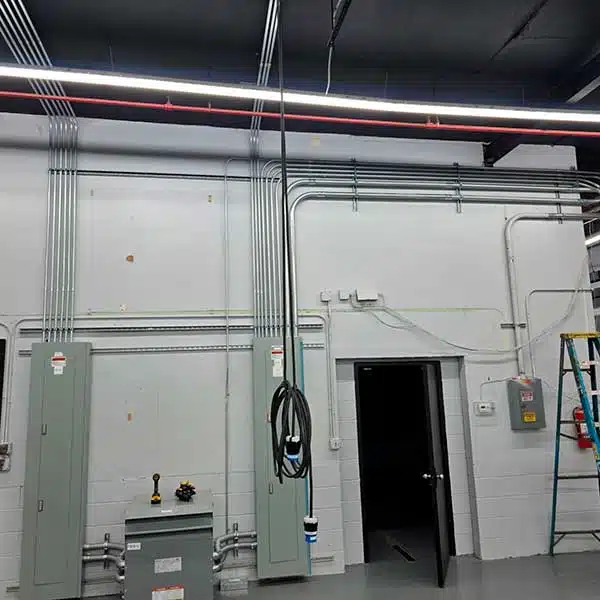
Common Questions About Industrial Electrical Services
The main difference between 208-volt and 480-volt three-phase power is the voltage supplied to electrical equipment, which affects current requirements and equipment compatibility.
Both systems are common in business and industrial environments, but they serve different applications.
- 208V Three-Phase: Common in commercial buildings and used for certain motors, HVAC systems, and equipment.
- 480V Three-Phase: Frequently used for larger industrial motors, machinery, and higher-demand equipment.
- Electrical Current: For the same amount of three-phase power, 480V systems generally require less current than 208V systems.
- Equipment Compatibility: Machinery must receive the voltage and power configuration specified by its manufacturer.
Higher voltage is not automatically better for every application. The correct system depends on equipment specifications, available utility service, and facility requirements.
A qualified industrial electrician should verify these details before equipment is connected.
Industrial electrical troubleshooting costs depend on the complexity of the problem, the equipment involved, and the time required to identify the cause.
A straightforward electrical fault may be located quickly, while an intermittent problem affecting several circuits or machines may require more extensive testing.
Factors affecting cost include:
- The voltage and complexity of the electrical system
- Whether the problem is constant or intermittent
- The accessibility of panels, wiring, and equipment
- Specialized testing or diagnostic requirements
- Replacement parts and necessary repairs
- Whether equipment must be shut down for testing
Troubleshooting and repair are not always the same expense. Identifying the problem may reveal damaged components or additional work that must be addressed.
Huey Electric offers free estimates. Call 973-842-1878 to explain the issue and discuss the next steps.
Some industrial electrical repairs can be planned to limit production interruptions, but many require affected equipment or circuits to be shut down for safety.
The extent of the shutdown depends on the electrical system, the location of the problem, and the work being performed.
Common considerations include:
- Equipment Isolation: Some repairs may affect only one machine or production area.
- Electrical Panel Work: Repairs may require shutting down multiple connected circuits.
- Main Electrical Service Work: Major service repairs or upgrades often require a broader shutdown.
- Production Scheduling: Planned maintenance windows may help reduce operational disruptions.
- Safety Procedures: Proper isolation, lockout/tagout, and verification of de-energization are essential.
Facility managers should discuss production schedules and critical equipment with their electrician before work begins.
Planning ahead helps determine which systems will be affected and how repairs can be coordinated safely.
Determining whether a facility has enough electrical capacity requires evaluating the existing electrical service, connected loads, and power requirements of the proposed machinery.
An available breaker space does not necessarily mean the electrical system can safely support additional equipment.
An electrical capacity evaluation may consider:
- Equipment Specifications: Required voltage, phase, current, and starting characteristics.
- Existing Electrical Loads: How much power the facility currently uses.
- Panel Capacity: Whether the distribution equipment can accommodate additional circuits.
- Main Electrical Service: Whether the building's service has sufficient available capacity.
- Equipment Location: Wiring distances, disconnect requirements, and installation conditions.
Industrial motors may also draw significantly more current during startup than during normal operation.
Before purchasing or installing new equipment, have an electrician review the manufacturer's electrical specifications and the facility's existing power system. This can help avoid unexpected installation costs and delays.
Industrial electrical maintenance should follow a schedule based on equipment manufacturer recommendations, operating conditions, applicable standards, and the facility's electrical maintenance program.
There is no single inspection interval appropriate for every industrial property. Facilities operating heavy machinery continuously may have different maintenance requirements than warehouses with lighter electrical loads.
Conditions that influence maintenance needs include:
- Dust and Debris: Accumulation can interfere with equipment cooling and contribute to electrical problems.
- Heat: Excessive temperatures can accelerate deterioration of electrical components.
- Vibration: Machinery vibration may contribute to connection and equipment problems.
- Moisture: Water exposure and condensation can damage electrical equipment.
- Equipment Age: Older systems may need closer monitoring and additional maintenance.
- Operating Hours: Equipment running continuously may require more frequent attention.
Maintenance should be performed by qualified personnel following appropriate safety procedures.
A documented maintenance program can help facility managers identify recurring problems, plan repairs, and reduce unexpected equipment interruptions.
An industrial electrical contractor should have the qualifications, experience, and safety practices appropriate for the electrical systems and equipment involved in your project.
Industrial work can involve higher voltages, complex power distribution, and machinery that requires specialized electrical knowledge.
Before hiring, consider:
- Licensing and Insurance: Confirm that the contractor meets applicable New Jersey requirements.
- Relevant Experience: Ask about previous work involving your equipment voltage and electrical system.
- Troubleshooting Ability: Determine whether the electrician can diagnose problems rather than simply replace components.
- Safety Procedures: Discuss shutdown requirements and how electrical hazards will be controlled.
- Communication: Ask how project findings, recommendations, and costs will be explained.
- Warranty: Understand what workmanship coverage is provided.
Huey Electric brings over 15 years of electrical experience, owner involvement, and a one-year workmanship warranty to its projects.
For industrial facilities, choosing a contractor familiar with the specific electrical work required is more important than choosing based on price alone.

